The New World
The beginning of the life they had gambled everything for.
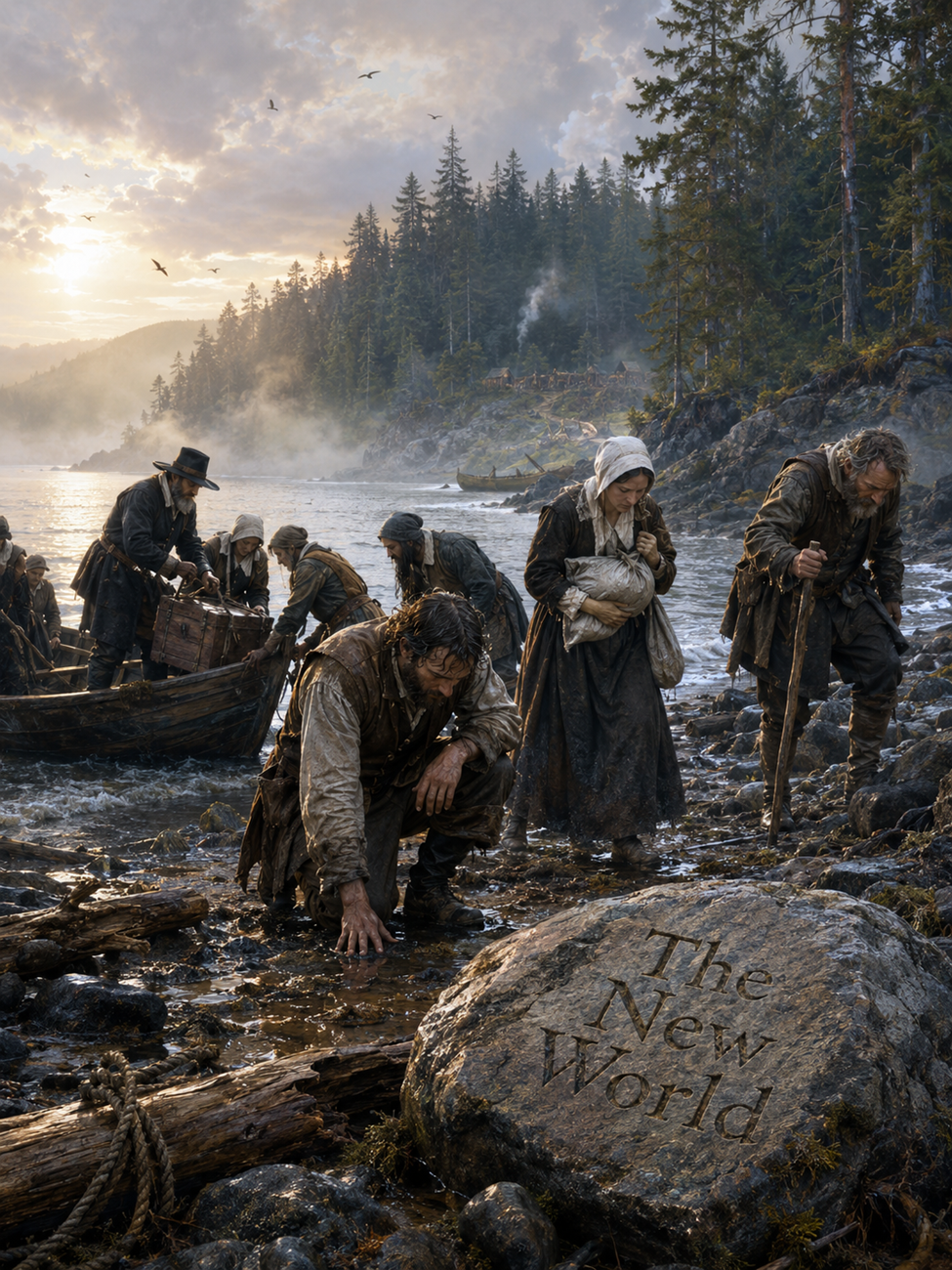
Land At Last
After weeks at sea, the first sight of shoreline must have felt almost impossible.
Land meant relief. It meant the ocean had not swallowed them. It meant sickness, fear, storms, grief, darkness, and uncertainty had finally carried them somewhere. Exhaustion met hope as tired eyes looked toward shore.
But reaching land did not mean the struggle was over. It meant a new struggle was about to begin.
The people who stepped from boats onto unfamiliar ground were not walking into comfort. They were walking into work, danger, mystery, responsibility, and uncertainty. The dream that had carried them across the Atlantic now had to become daily life. Hope brought them there, but hope alone would not build shelter, find food, survive weather, or create a future.
America Was Vast And Unknown
To many who arrived from crowded towns and old European villages, the land before them must have seemed immense.
There were deep forests, unfamiliar wildlife, wide rivers, strange sounds, harsh seasons, and a silence unlike the settled places they had left behind. Nature was larger, wilder, and more powerful than many had imagined.
The New World did not simply welcome them. It confronted them with scale.
A forest could be beautiful, but it could also hide danger, hunger, confusion, and isolation. A river could provide life, but it could also divide, flood, freeze, or carry people into the unknown. Land was opportunity, but it was also labor waiting to be done.
The first sight of America may have lifted their hearts, but the first days on shore must have reminded them that survival would require everything they had.
Not An Empty Land
But this land was not empty.
Indigenous peoples already lived here. They had communities, traditions, trade routes, languages, knowledge, spiritual beliefs, family structures, and histories of their own. The land that was new to European settlers was not new to everyone.
To tell this story honestly, we must remember that history is human and complicated.
Early encounters between settlers and Native peoples ranged from cooperation and trade to misunderstanding, fear, conflict, and loss. Some settlers depended on Native knowledge to survive. Some relationships brought exchange, assistance, and uneasy peace. Others became marked by mistrust, disease, pressure over land, violence, and grief.
The story cannot be told truthfully if we pretend the land was untouched, waiting, or simple.
The settlers entered a world already alive with human meaning. They brought hope, faith, ambition, fear, and need. Indigenous peoples carried their own homes, memories, responsibilities, and futures.
From the beginning, the New World was not one simple story. It was many human stories meeting, helping, misunderstanding, colliding, and changing one another.
Survival Began Immediately
Survival did not wait.
Shelter had to be found or built. Fresh water had to be secured. Food was uncertain. Weather could be harsh. Disease and isolation threatened families who had already endured so much. Every day required labor, judgment, patience, and cooperation.
The dream of a new life quickly became the work of staying alive.
People had to learn the land, read the seasons, protect one another, and make decisions with limited knowledge. A mistake could cost dearly. Too little food, poor shelter, contaminated water, sickness, conflict, or a hard winter could turn hope into fear very quickly.
The New World offered possibility, but it did not remove hardship. It simply changed the form hardship took.
Families Had To Become Builders
The people who arrived had to become builders almost immediately.
They built homes, farms, roads, wells, churches, fences, docks, and communities. They learned that survival depended on more than courage alone. It required cooperation, responsibility, skill, endurance, and neighbors willing to help one another.
A future America did not appear all at once.
It was built slowly, by human hands.
Someone had to clear ground. Someone had to plant. Someone had to repair tools, carry water, raise walls, tend fires, protect children, care for the sick, bury the dead, and begin again after failure.
The beginning of America was not only found in speeches, famous names, or founding documents. It was also found in ordinary labor repeated day after day by people trying to make life possible.
The Meaning Of Opportunity Changed
In the Old World, opportunity often meant escaping limits placed on a person by birth, class, conflict, or tradition. In the New World, opportunity meant something different.
Freedom came with enormous responsibility.
Survival depended on effort. There were few guarantees. The land could reward resilience, but it could also punish weakness, poor planning, isolation, and pride.
Opportunity was real, but it was not easy.
The people who came were not handed a finished civilization. They had to help create one. The freedom they sought did not remove duty. It increased it.
If a family wanted a home, someone had to build it. If a community wanted order, people had to cooperate. If children were to inherit something better, parents had to sacrifice in ways those children might never fully understand.
Human Beings Build Civilization Slowly
Civilization is not built in a single moment.
It grows when ordinary people clear ground, raise walls, plant crops, dig wells, share tools, bury loved ones, teach children, keep promises, worship, trade, forgive, defend, repair, and begin again after failure.
Parents sacrificed for children. Neighbors depended on neighbors. Small settlements became the roots of future communities.
This is where remembrance matters.
The comforts later generations inherit did not appear by accident. They were built, protected, repaired, and handed forward.
Gratitude deepens when we understand the cost.
Civilization is fragile.
Freedom has always required responsibility.
The New World gave people a beginning, but not an easy one.
It gave them land, but the land had to be understood. It gave them room, but room had to be shaped into homes, farms, and communities. It gave them possibility, but possibility demanded work, discipline, cooperation, humility, and endurance.
That is still true.
A better future does not build itself. It has to be accepted as a responsibility, not merely enjoyed as a gift.
As settlements took shape, different regions began developing different identities, economies, habits, and cultures. The foundation of future America slowly began forming, not as one simple story, but as many human stories unfolding at once.
Next, the story moves from arrival into the building of life itself, where survival, work, faith, conflict, cooperation, and responsibility would begin shaping the first roots of a future nation.