Chapter 22
When Ordinary Citizens Became an Army
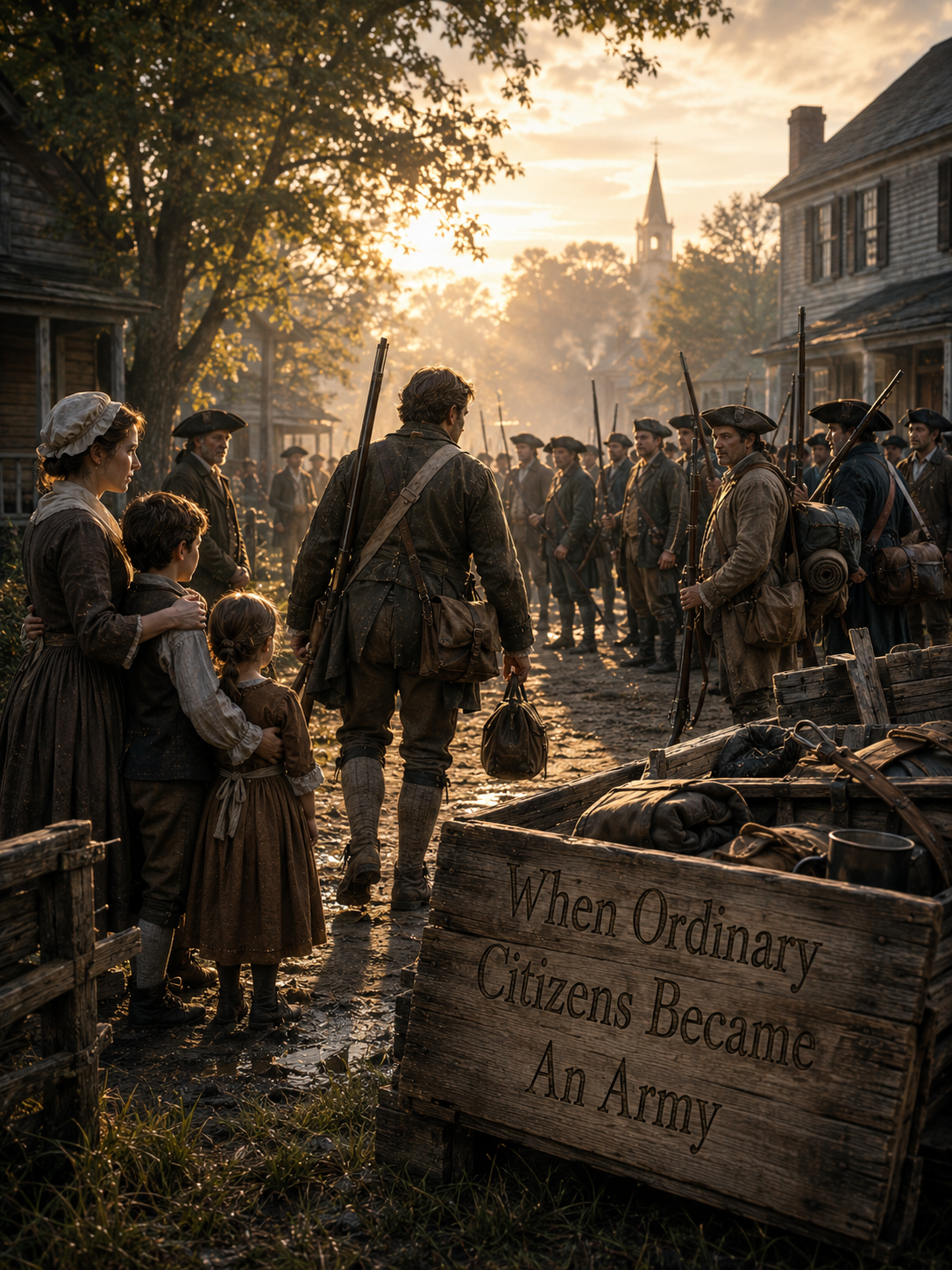
They left behind the comfort of ordinary life and stepped forward together, not because they sought war, but because they believed future generations deserved the right to live free.
The News Spread Rapidly
After Lexington and Concord, the news moved faster than comfort could follow.
Word traveled from road to road, farm to farm, village to village, and colony to colony. Riders carried urgent messages through the night and into the following days. Families heard fragments first, then details. Shots had been fired. Men had fallen. British troops had marched. Colonial militia had stood.
Something irreversible had begun.
For many people, the news did not arrive as history.
It arrived as fear at the door.
A neighbor came with a warning. A rider passed through town. A bell rang. A meeting was called. People gathered in churches, taverns, homes, and open roads, trying to understand what the first bloodshed meant for them.
The conflict was no longer rumor.
It had stepped out of conversation and entered real life.
That is how revolutions often reach ordinary people. Not all at once, and not with perfect understanding. First comes the report. Then comes the silence. Then comes the question no one can avoid:
What are we supposed to do now?
Families Faced The Meaning
The news did not affect only the men who would gather with muskets.
It entered kitchens, barns, workshops, bedrooms, and fields. It changed the faces of wives, mothers, fathers, children, and neighbors. A political struggle that had once seemed distant now pressed into family life.
Every household had to imagine loss in a new way.
Some families had already feared this day would come. Others may have hoped the tension would pass without war. But once blood had been spilled, hope became more complicated. Men who had argued, trained, stored supplies, or attended local meetings now had to decide whether they would leave home and join others.
Families had to decide how to endure their absence.
That part of history is easy to overlook. We often remember the armed men, the commanders, the battles, and the turning points. But behind every man who walked away from home stood people who had to let him go.
Freedom was not carried only by those who marched.
It was also carried by those who watched them leave.
Men Began Leaving Home
Across the colonies, ordinary men began stepping out of ordinary life.
Farmers left fields unfinished. Tradesmen left tools behind. Fathers embraced their children. Husbands said words they hoped would not be their last. Sons looked back at doorways, fences, barns, and familiar roads, knowing they might return changed, wounded, or not at all.
Most did not leave as professional soldiers.
They left as citizens.
Some had militia experience. Some had trained more than others. Some were better supplied. Some carried what they owned because there was little else available. Their clothing did not make them look like a unified army. Their preparation varied greatly.
Their strength came from something deeper than appearance.
They were not marching into certainty. They were moving toward confusion, danger, and hardship. Yet they went because the world they had known was no longer safe in the same way.
The first shots had forced a decision.
Ordinary life could not continue untouched while the question of liberty remained unanswered.
Militias Gathered Together
Men arrived from farms, villages, and towns, gathering in growing numbers.
Some came alone. Some came with neighbors. Some came under local officers. Others came because their communities expected them to stand where they were needed. What began as scattered resistance started taking on the shape of a larger cause.
But this gathering was not yet the disciplined army future generations might imagine.
Supplies were limited. Training was uneven. Weapons were not always uniform. Food, powder, clothing, shelter, and organization all became immediate concerns. The men gathering together had courage, but courage did not solve every practical problem.
They needed leadership, structure, patience, and endurance.
Still, something powerful was happening.
A people who had long debated their rights were beginning to defend them with their bodies. Local militia groups, once tied mainly to their own communities, were becoming part of a wider struggle.
The colonies were learning that resistance required more than anger.
It required sacrifice, cooperation, and the willingness to stay when the first emotion faded.
Courage Without Certainty
The courage of these citizens becomes more meaningful when we remember how little they could know.
They did not know whether they could defeat the British Empire. They did not know how long the conflict would last. They did not know whether other colonies would remain united. They did not know whether their own families would survive the hardship that war could bring.
That uncertainty is the heart of the chapter.
Courage is not the absence of fear.
Courage is action when fear has every reason to exist.
These ordinary citizens stepped forward before victory had a shape, before independence was guaranteed, before the future had written them into legend.
They were human beings carrying mixed emotions. Some felt anger. Some felt grief. Some felt duty. Some may have felt dread. Some likely wondered whether the cost would become too great.
Yet they gathered anyway.
History was asking ordinary people to become more than they had planned to be.
A Cause Became A Burden
As more citizens gathered, the cause grew heavier.
It was no longer only about protest, speeches, taxes, petitions, or resistance to unfair rule. It was now about sustaining men in the field, protecting communities, feeding families, holding resolve, and accepting that the road ahead might be long.
The burden did not fall evenly.
Some families gave sons. Some gave husbands. Some gave supplies. Some gave labor. Some gave shelter. Some gave prayers. The birth of a citizen army was not only a military development.
It was a community sacrifice.
This is where the American story deepens.
The struggle for freedom was not carried by famous names alone. It moved through unnamed homes, worn roads, anxious mothers, silent fathers, worried wives, and ordinary men who took their place among others.
The army that began forming was imperfect, unpolished, and uncertain, but it carried something no empire could easily measure:
the consent of people willing to bear hardship for a future they might never fully see.
When ordinary citizens became an army, the Revolution changed in spirit as well as scale.
The colonies were no longer only resisting. They were beginning to organize themselves around sacrifice. They were learning that freedom demands more than belief. It demands people willing to carry belief into action.
This chapter matters because it reminds us that history is often built by people who do not feel ready.
They step forward with imperfect knowledge, limited resources, and trembling hearts. They do what responsibility requires before they know whether the result will justify the cost.
The first shots had been fired.
Now the people had to decide whether the sound would fade into fear or grow into a cause.
Across farms, villages, and roads, ordinary citizens answered. They became the beginning of an army, and in doing so, they carried hope through uncertainty for generations who would one day inherit the freedom they were only beginning to defend.