Chapter 28
The Night Hope Returned
After months of cold, sacrifice, exhaustion, and fear, a small victory in the darkness reminded ordinary people of something civilization has always depended upon: hope can return even when the world seems closest to losing it.
The Attack At Trenton
After crossing the Delaware, exhausted soldiers still had to march through brutal winter conditions.
The river had not been the end of the test. Cold, snow, sleet, darkness, and fatigue continued pressing against them. Many lacked proper shoes and clothing. Some were nearly spent before the attack even began.
Yet they continued moving forward because the cause itself seemed to depend on action.
The attack at Trenton came after a season when morale had been dangerously low and the Revolution had seemed close to breaking. That matters.
This was not a confident army marching from strength into easy success.
These were tired men moving through hardship because doing nothing might have allowed the cause to die. Their courage had already been tested before the first blow was struck.
Surprise And Determination
The attack came unexpectedly, and that surprise mattered.
Discipline and courage overcame overwhelming fatigue. Men who had endured cold, fear, hunger, and discouragement now had to act with focus when the moment arrived. The same ordinary citizens who had suffered through long uncertainty became part of an extraordinary turning point.
History often remembers the result, but the human truth lives inside the strain before it.
Imagine trying to move with precision when your body is tired, your clothing is inadequate, and the cold has entered your bones. Imagine carrying fear and still obeying the moment.
The strength of Trenton was not only in the plan.
It was in the men who had enough endurance left to carry it out.
A Victory Greater Than Numbers
The battle itself was relatively small compared to the massive wars future generations would study.
By numbers alone, it might not seem large enough to change the emotional direction of a Revolution. But history is not always turned by size. Sometimes a smaller victory arrives at exactly the moment when a people needs to believe survival is still possible.
That is what made Trenton powerful.
It did not end the war. It did not remove the hardship. It did not guarantee independence. But it interrupted despair.
It told exhausted soldiers, anxious families, uncertain leaders, and worried communities that the cause had not collapsed.
The Revolution was still alive.
After so much suffering, that truth carried enormous emotional weight.
Hope Spread Through The Colonies
Hope began spreading through the colonies because people needed more than arguments.
They needed signs of life.
Morale improved. Some soldiers reenlisted. Communities felt renewed strength. The sacrifices of the previous months no longer seemed entirely swallowed by cold, hunger, and defeat. Perseverance began to look less meaningless.
News of victory can do something powerful inside a tired people.
It can lift shoulders that have been bent too long. It can remind families that waiting and sacrifice may still matter. It can help soldiers believe that the next hard step is worth taking.
Hope did not return as certainty.
It returned as renewed possibility, and in that season possibility itself was precious.
The humanity of the moment should not be overlooked.
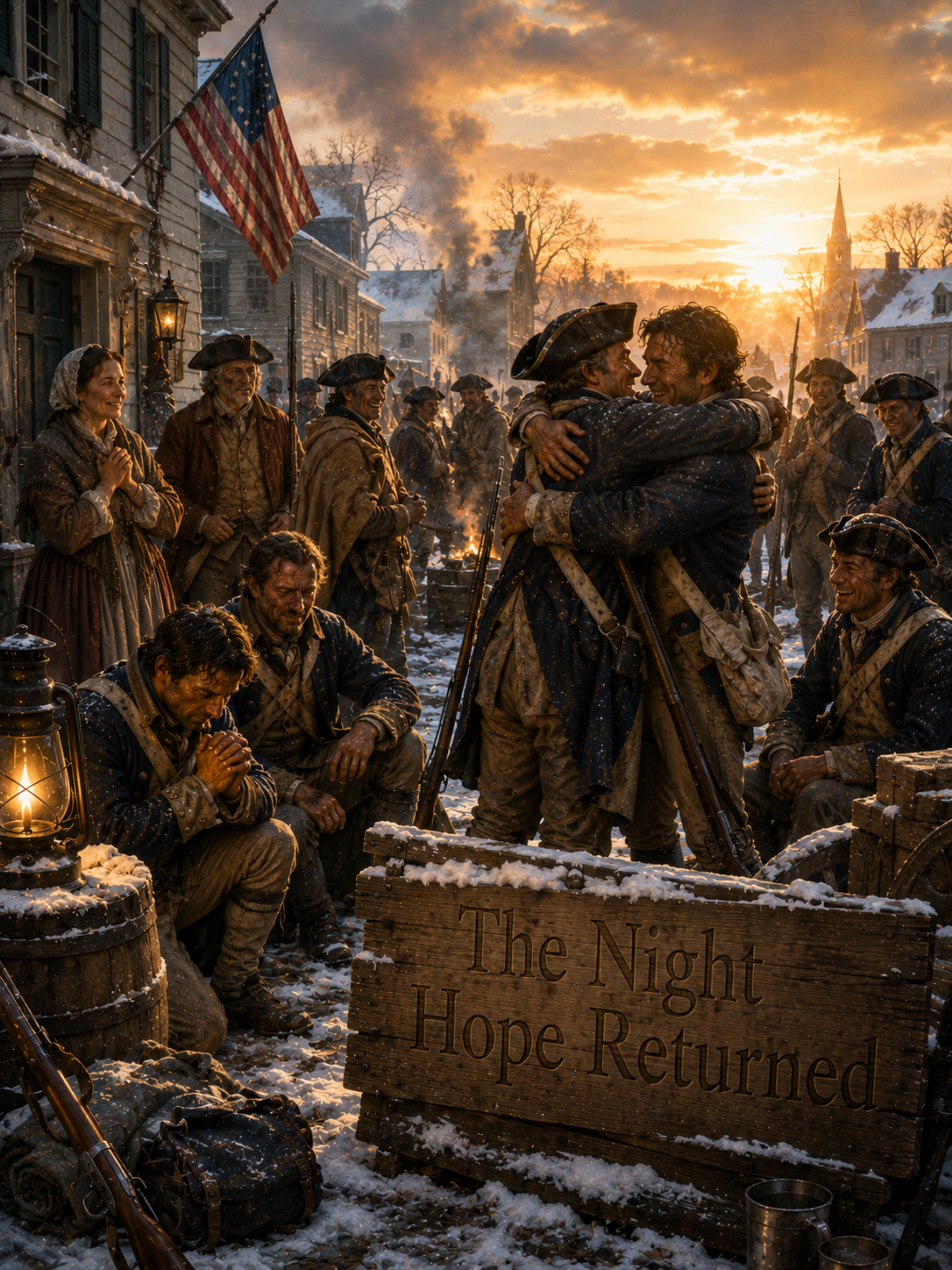
Exhausted men may have cried, embraced, prayed, or simply stood in silence because their bodies and spirits had carried so much. Relief can be as overwhelming as fear when people have lived too long near despair.
Some remembered why they had endured so much hardship.
Some may have thought of home.
Some may have felt, for the first time in a long while, that the future had not abandoned them.
Many still feared what lay ahead. The war remained dangerous. Families were still separated. Supplies were still uncertain. The British Empire had not vanished.
But the men who had crossed, marched, fought, and endured no longer felt entirely defeated by the future.
That emotional change mattered deeply.
Hope can return after great suffering, but often it returns slowly and at first only as a small light. Perseverance reveals its value in ways people cannot always predict beforehand.
Those who keep going through dark seasons may not know which step will become the turning point.
Courage during hardship can inspire generations far beyond those who lived it. The people at Trenton could not see all the meaning future generations would place on that night and morning. They could only live the moment in front of them.
Yet by refusing to quit when despair seemed reasonable, they helped carry humanity forward through an impossible season.
Relief spread through the camps, but exhaustion remained.
Hardship continued. The war still demanded sacrifice, patience, and courage. No one could honestly say the struggle was over. But now determination carried renewed life inside it.
The same men who had nearly been swallowed by winter had seen that action could still matter.
That is the emotional atmosphere of this chapter:
tired hope.
Not loud triumph.
Not simple happiness.
Tired hope.
The kind that rises after people have been worn down and suddenly discover that their suffering has not been wasted.
The Revolution was still fragile, but something inside it had changed.
The cause had survived one of its darkest nights, and the people began to believe it might survive another.
The night hope returned reminds us that difficult seasons do not define the entire future.
A turning point can appear after long discouragement, and perseverance can create possibilities no one could have predicted beforehand. Future generations often inherit the results of people who refused to quit when the evidence around them seemed dark.
From here, the Revolution begins rebuilding strength.
Belief returns slowly. International attention starts to grow. America’s struggle begins becoming larger than the colonies alone.
But before those wider doors open, this moment matters because it restored something almost lost.
It reminded ordinary people that hope itself can become one of civilization’s greatest strengths.