Chapter 48
Labor Movements Demand Human Dignity
Ordinary workers were not only asking for wages; they were asking whether the nation would remember that the people building its future were human beings.
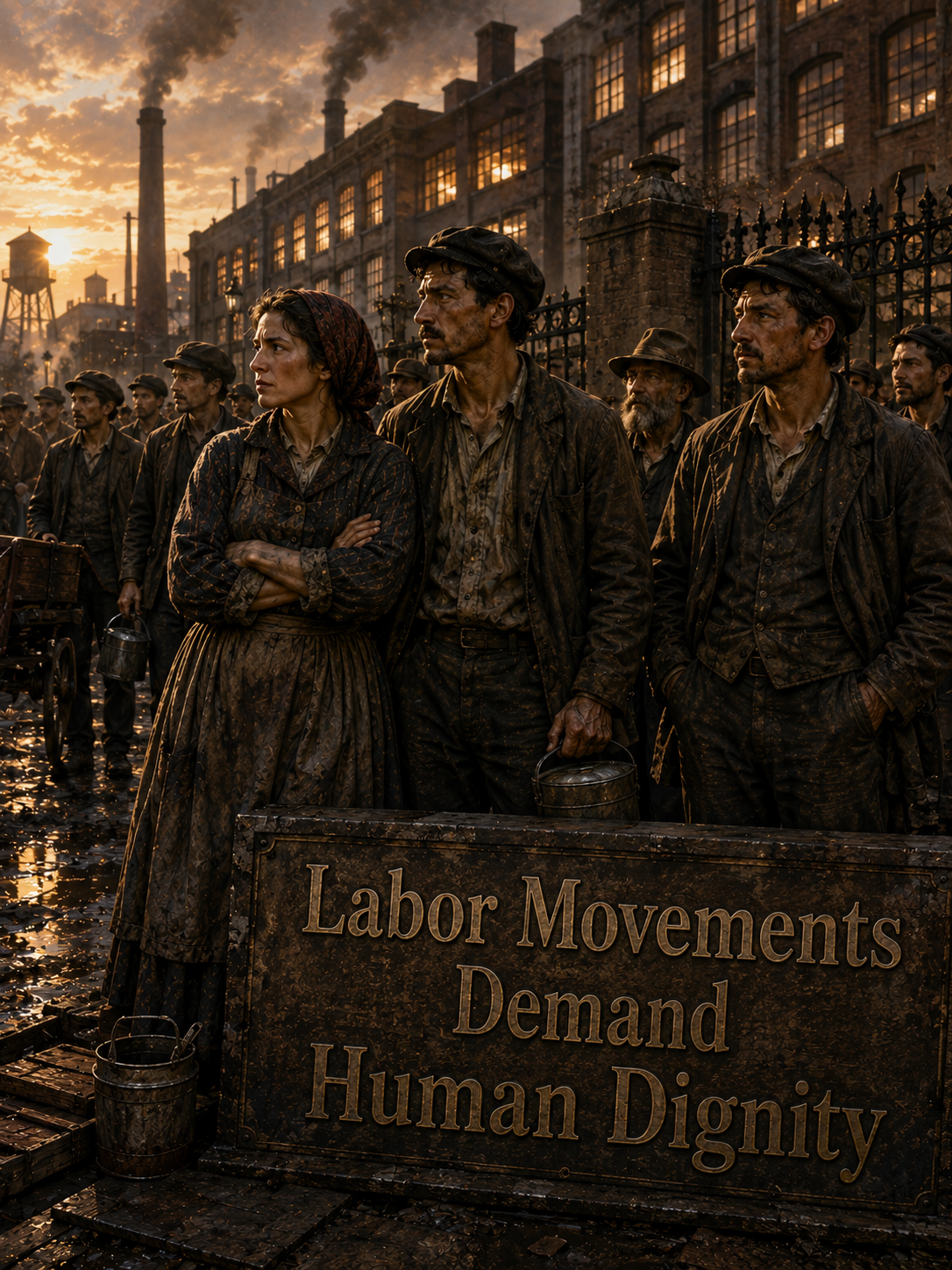
The People Beneath The Progress
Industrial America was filled with motion, invention, wealth, smoke, steel, light, and ambition.
Factories produced goods faster than earlier generations could have imagined. Cities expanded. Railroads moved people and products across great distances. Businesses grew powerful, and the nation became more confident in its own modern future.
But beneath that progress stood ordinary workers.
They were the hands inside the machine.
They laid track, loaded freight, mined coal, worked looms, tended furnaces, stitched garments, carried tools, fed boilers, swept floors, and stood beside machines that did not care whether a human body was tired.
For many families, industrial work offered survival.
A wage could mean rent, bread, coal, clothing, or a child kept in school a little longer. But survival is not the same as dignity.
As America grew richer and more powerful, millions of workers began asking whether progress could truly be called progress if the people creating it were left unsafe, exhausted, and poor.
Work Could Break A Body
Factory labor could be brutal.
Hours were long, wages were often low, and dangerous machinery caused injuries that could change a family’s life in an instant. A crushed hand, damaged lung, burned skin, broken back, or sudden death did not remain inside the workplace.
It followed the worker home.
It entered the kitchen, the rent, the children’s meals, and the family’s future.
Many workers had little protection. If they complained, they could be replaced. If they were injured, they could lose income. If they became sick, the household might fall into desperation.
The system often measured production more easily than pain.
Children sometimes worked beside adults because families needed every possible wage to survive.
That fact should stop us.
Childhood, which should have been protected, was often pulled into the machinery of necessity. Children learned exhaustion early. They watched parents sacrifice, worry, endure, and keep going because there seemed to be no other choice.
This was the human cost hidden beneath industrial success.
Families Carried The Fear
Labor hardship did not belong only to the worker.
It belonged to the family.
A mother might count coins and wonder whether there would be enough for food and rent. A father might leave for work knowing an accident could take away his ability to provide. Children might grow up understanding that one lost job, one illness, or one injury could change everything.
Immigrant families often carried this pressure with even less protection.
Many lived in crowded neighborhoods, worked relentless schedules, struggled with language barriers, and faced discrimination while trying to build a future in a country that needed their labor but did not always welcome them fully.
Still, families endured.
They endured because hope had not disappeared. Parents kept believing that sacrifice might someday lead somewhere better. They worked so children might have more room to live. They accepted hardship when they thought hardship was temporary.
But when hardship became a permanent condition built into the system itself, citizens began to question whether endurance alone was enough.
Sometimes survival teaches patience.
Sometimes it teaches people to stand.
Solidarity Became Protection
Labor unions and worker organizations grew because many people learned that standing alone was dangerous.
A single worker could be ignored, fired, or replaced. A group of workers could become harder to silence.
Solidarity became one of the few protections ordinary people possessed.
Strikes, protests, meetings, and organizing efforts spread through industrial cities and factory towns. Workers demanded safer conditions, fairer wages, shorter hours, and recognition of their basic humanity.
They were not only challenging employers.
They were challenging the idea that economic growth gave powerful institutions the right to use people without listening to them.
Labor movements were not always simple.
They could be messy, divided, risky, and sometimes met with violence or public suspicion.
But at their core was a deeply human claim:
hard work should not leave families trapped beneath the prosperity they helped create.
That claim still matters.
People will eventually challenge systems they believe deny fairness and dignity. The human spirit can endure a great deal, but it does not easily accept being treated as a tool forever.
Reform Challenged The System
As the hardships of industrial life became harder to ignore, reformers began challenging the system in different ways.
Journalists exposed dangerous conditions, political corruption, overcrowded housing, and abuses of power. Social reformers pushed for education, safer workplaces, labor protections, child welfare, and better living conditions.
Ministers, teachers, writers, organizers, neighbors, and ordinary citizens began asking what kind of nation America was becoming.
The question was not whether industry should exist.
Industry had transformed the country and created real opportunity.
The question was whether industry would remain connected to humanity.
Could factories, railroads, corporations, and cities grow without crushing the people inside them?
Could prosperity be shared broadly enough to strengthen ordinary families?
Could a nation become powerful and still protect the vulnerable?
These questions did not produce easy answers. But asking them changed the country. Reform began when people refused to accept harmful conditions as permanent and when enough citizens began to believe that the nation’s success had to include human dignity.
Dignity Became Part Of The Future
Labor movements helped force America to confront one of the great moral questions of modern life:
What is progress worth if it forgets the people who make it possible?
The answer would unfold over generations. Workers would continue organizing. Families would continue sacrificing. Reformers would continue exposing what powerful institutions preferred to hide.
The struggle for safer workplaces, fair wages, reasonable hours, and protection for children would become part of the larger American inheritance.
Future generations would benefit from courage they did not personally have to spend.
That is one reason remembrance matters.
Protections that later people may take for granted were often purchased by workers who risked jobs, reputations, safety, and sometimes life itself. They demanded dignity not only for themselves, but for families and children who would come after them.
Labor movements did not end inequality.
They did not solve every injustice.
But they insisted that ordinary people mattered inside the nation’s success.
America’s factories, railroads, mines, and cities helped build the modern world.
Its workers helped remind that world that no economy is healthy when the human being disappears inside the machine.
From here, World War I pulls America into global conflict, and ordinary families once again face sacrifice, uncertainty, and profound historical change.